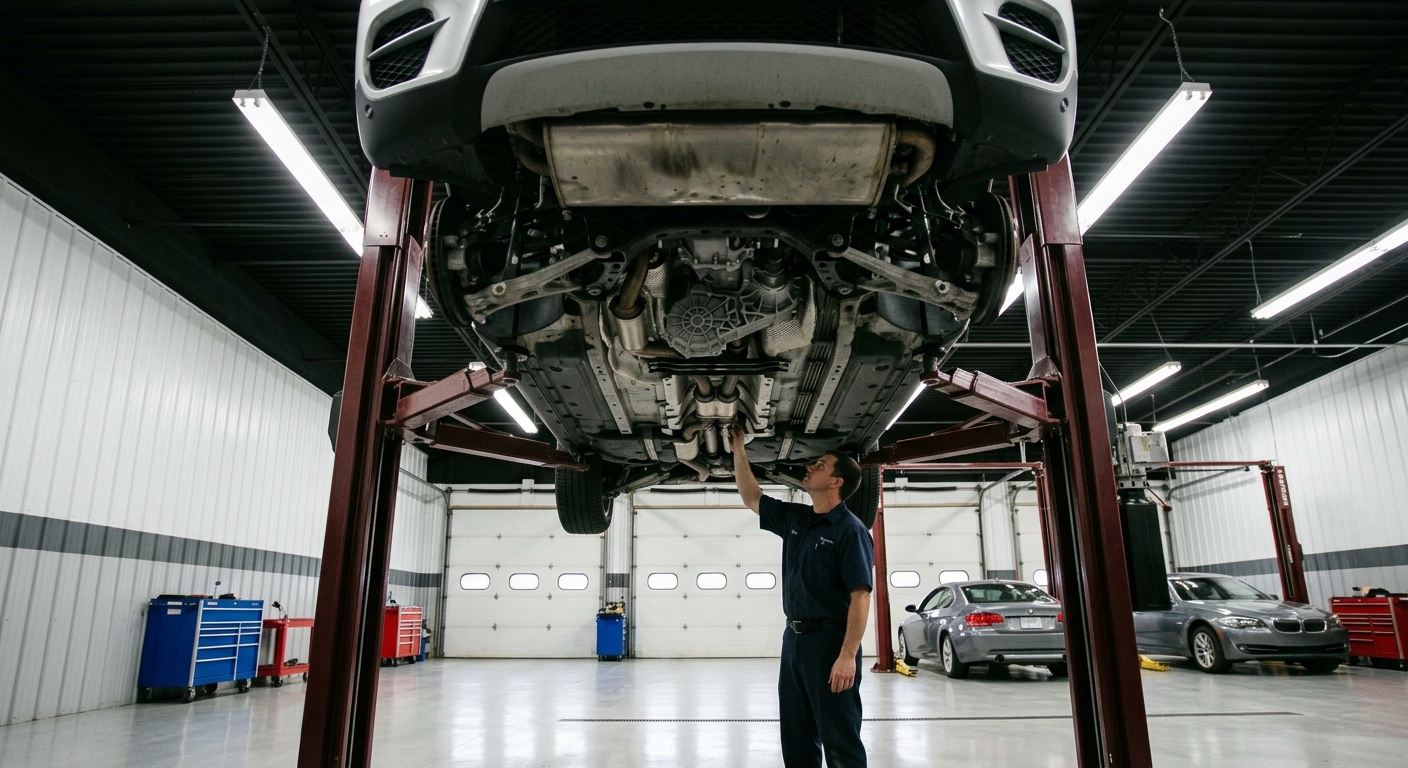
BMW's xDrive all-wheel-drive system is one of the best in the industry — when it's working. It's a genuinely intelligent system that continuously varies torque distribution between front and rear axles, improving traction and handling in ways that feel invisible to the driver. But when the transfer case starts failing, the warnings and symptoms can range from mildly concerning to downright alarming.
The good news? That 4WD warning light doesn't always mean you need a $5,000+ transfer case replacement. In many cases, the issue is a much more affordable actuator motor or servo motor repair. Let's break down how the system works, what fails, and how to approach it intelligently.
How BMW xDrive Works
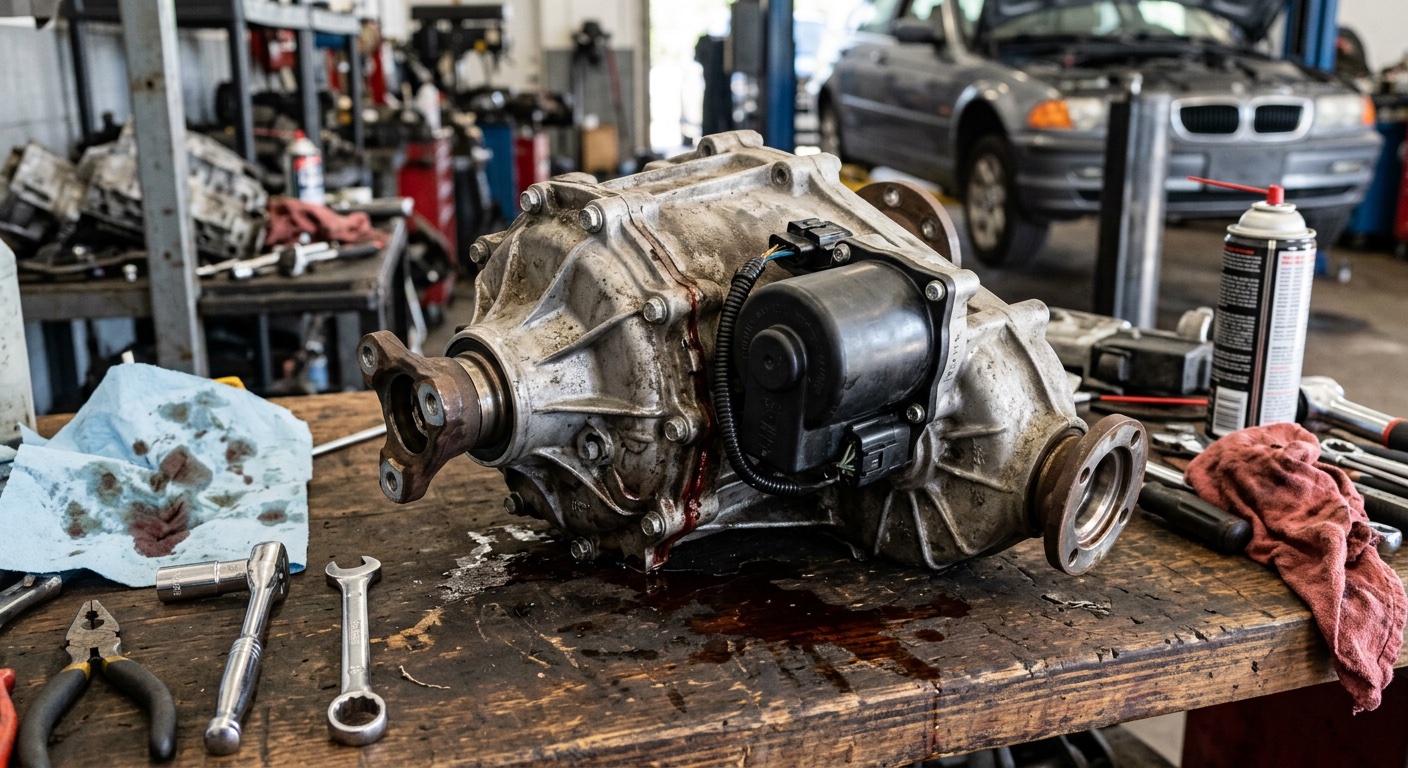
Unlike traditional part-time or full-time 4WD systems, BMW's xDrive is a permanent all-wheel-drive system that uses an electronically controlled multi-plate clutch inside the transfer case to vary torque distribution. Here's the core architecture:
- ATC (Active Transfer Case) — the central unit bolted to the transmission that splits power between front and rear axles
- Multi-plate clutch pack — hydraulically engaged plates that control how much torque goes to the front axle
- Actuator motor (servo motor) — an electric motor that operates the clutch engagement mechanism
- Position encoder — tells the xDrive ECU exactly where the clutch engagement is at any moment
- xDrive ECU — the electronic brain that communicates with DSC, DME, and steering angle sensors to determine optimal torque split
In normal driving, the system sends the majority of torque to the rear wheels (roughly 60/40 rear/front) to maintain BMW's signature rear-drive feel. Under slip conditions, it can shift up to 100% of torque to either axle within milliseconds. The system makes adjustments continuously — hundreds of times per second — based on wheel speed differences, steering angle, throttle position, and yaw rate.
Key point: Unlike systems from some competitors, BMW's xDrive doesn't wait for slip to occur before engaging. It's predictive — using data from the DSC (stability control) system to pre-load torque to the axle that needs it before the wheels actually lose traction.
Common Transfer Case Failure Points
The transfer case itself is actually quite robust mechanically. The failures we see most often are in the electromechanical components that control it:
1. Actuator Motor (Servo Motor) Failure
This is the #1 failure point in BMW transfer cases, and it's also the most affordable to fix. The actuator motor is an electric motor that physically engages and disengages the multi-plate clutch pack. Over time, the motor brushes wear out, the internal gears strip, or the motor simply burns out from years of continuous operation.
- Symptoms: 4x4 warning light, "Drivetrain malfunction" message, grinding noise from under the car during low-speed turns
- Common on: E70 X5, E71 X6, F15 X5, F16 X6, F25 X3, F26 X4
- Repair: The actuator motor can often be replaced separately without removing the entire transfer case — a fraction of the cost of full replacement
2. Internal Gear Teeth Wear
Inside the actuator mechanism, small gear teeth transfer the motor's rotation to the clutch engagement mechanism. These gears are often made of softer materials (sometimes even plastic) and wear down over time. When the teeth strip, the motor spins but can't engage the clutch properly.
- Symptoms: Similar to actuator motor failure — 4x4 light, whirring noise without clutch engagement
- Common on: E70/E71 (most common), F15/F16
- Repair: Actuator motor replacement usually includes these gears
3. Position Encoder Failure
The position encoder tells the xDrive ECU exactly where the clutch engagement mechanism is positioned. When it fails or sends erratic data, the ECU can't properly control torque distribution and throws a fault.
- Symptoms: 4x4 warning light, erratic torque distribution (car feeling like it's pulling to one side), fault codes for position sensor plausibility
- Common on: All xDrive models with ATC transfer cases
- Repair: Encoder replacement and recalibration
4. Clutch Pack Wear
The multi-plate clutch pack is the mechanical heart of the system. Over many miles, the clutch plates wear down, reducing the transfer case's ability to lock up and transfer torque effectively. This is the most serious failure and is more common in vehicles that have been driven aggressively, towed heavy loads, or had the transfer case fluid neglected.
- Symptoms: Slipping under hard acceleration, vibration under load, inability to transfer full torque to front axle
- Common on: Higher-mileage vehicles, especially those used for towing
- Repair: Full transfer case rebuild or replacement
Which BMW Models Are Most Affected?
While all xDrive vehicles can experience transfer case issues, some models are significantly more prone:
- E70 X5 (2007-2013) — the most common model we see with transfer case failures, particularly the actuator motor
- E71 X6 (2008-2014) — shares the same transfer case architecture as the E70, same failure patterns
- F15 X5 (2014-2018) — improved over the E70 but still susceptible, especially at higher mileage
- F16 X6 (2015-2019) — same as F15
- F25 X3 / F26 X4 (2011-2017) — smaller transfer case, but same actuator motor issues
- E90/E92 3-Series xDrive — less common than SUVs but still occurs
The G-series vehicles (G05 X5, G06 X6, G01 X3) have improved transfer case designs and we see significantly fewer failures in these models, though they're also newer with fewer miles on them.
Actuator Motor Replacement vs. Full Transfer Case
This is the critical question — and it's where many shops (especially dealers) get it wrong. Here's the reality:
When an Actuator Motor Replacement Is Sufficient
- The 4x4 warning is related to motor or encoder fault codes
- No metal debris in the transfer case fluid
- Clutch pack engagement is still within specification
- No grinding or clunking from the transfer case body itself
When You Need a Full Transfer Case
- Metal debris found in the fluid (indicating internal mechanical wear)
- Clutch pack is worn beyond specification
- Chain stretch or bearing failure (less common)
- Physical damage to the case housing
Important: Dealers often quote full transfer case replacement when only the actuator motor has failed. Always get a second opinion from a BMW specialist who can differentiate between actuator failure and internal transfer case failure.
Transfer Case Fluid: The Maintenance Nobody Does
BMW officially considers the transfer case fluid to be "lifetime fill" — meaning they claim it never needs to be changed. This is, frankly, optimistic at best. Transfer case fluid breaks down over time, loses its friction modification properties, and accumulates wear particles. Regular fluid changes are one of the best preventive measures you can take.
- Recommended interval: Every 50,000-60,000 miles
- Fluid type: BMW specifies a particular synthetic fluid — using the wrong fluid can damage the clutch pack
- Cost: A fluid change is a fraction of the cost of any transfer case repair
- Benefit: Extends clutch pack life, keeps actuator mechanism clean, provides early warning of internal wear (metal particles visible in drained fluid)
Highline's Approach to xDrive Diagnostics
When an xDrive vehicle comes to Highline with a 4x4 warning, we follow a systematic diagnostic process:
- Full fault code scan — reading xDrive ECU, DSC, and DME for related fault codes
- Actuator motor function test — verifying the motor is operating and the encoder is providing accurate position data
- Transfer case fluid inspection — checking for metal particles, contamination, or abnormal color
- Live data analysis — monitoring clutch engagement values, torque distribution, and wheel speed differences during test drive
- Targeted repair recommendation — actuator motor replacement if that's the issue, or full transfer case if internal damage is confirmed
Our goal is always the most cost-effective repair that properly solves the problem. If an $800 actuator motor replacement fixes the issue, there's no reason to spend $4,000+ on a transfer case.
xDrive Warning Light On?
Don't assume the worst — let Highline properly diagnose your transfer case before committing to expensive repairs. Actuator motor issues are far more common than full transfer case failures.