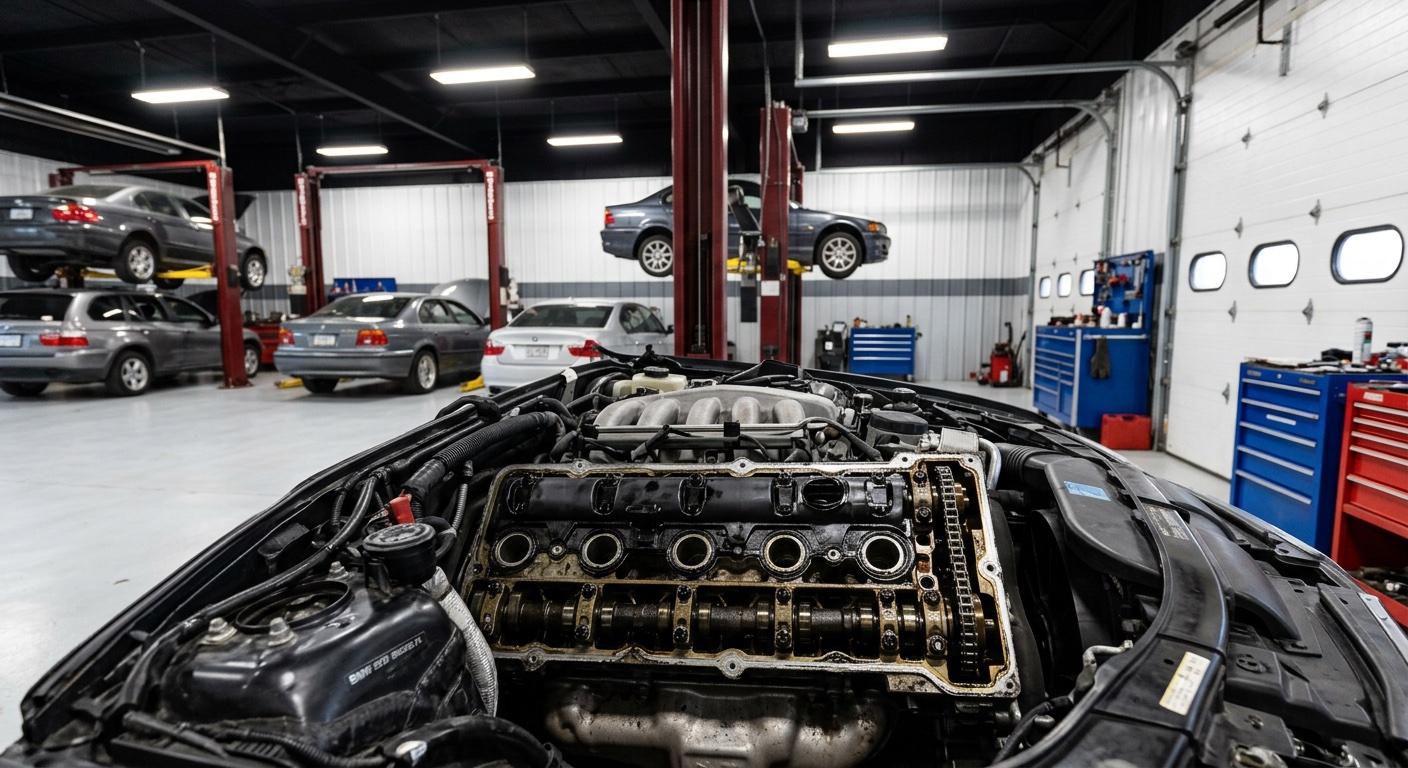
If you ask any BMW mechanic to name the most common oil leak they see, the answer is nearly universal: the valve cover gasket. It's so common that it's practically a rite of passage for BMW ownership. Every engine — N20, N52, N54, N55, N63, you name it — will eventually develop a valve cover gasket leak. It's not a question of if, but when.
Many owners dismiss it as "just a cosmetic leak" or "a little oil seepage." And in the very early stages, that's technically true. But a leaking valve cover gasket always gets worse, and the consequences of ignoring it go well beyond cosmetics — including misfires, engine smoke, and even fire risk.
What the Valve Cover Gasket Does
The valve cover sits on top of the cylinder head and seals the camshafts, valvetrain, and upper engine internals from the outside. The gasket — a molded rubber or silicone seal — sits between the valve cover and the cylinder head, preventing oil from leaking out.
On BMW engines, the valve cover also houses or covers the spark plug wells — the tubes that the spark plugs and ignition coils sit in. Each spark plug well has its own seal (called a spark plug well seal or tube seal) that's part of the valve cover gasket assembly. This is important, because it means a valve cover gasket leak can affect not just the exterior of the engine, but also the ignition system.
Why BMW Valve Cover Gaskets Fail
The gasket failure is a predictable result of the operating environment:
Heat Cycling
Every time the engine runs, the cylinder head heats to 200°F+ and the valve cover expands. When the engine cools, everything contracts. This constant expansion and contraction fatigues the rubber gasket material over thousands of cycles. The rubber hardens, loses its elasticity, and can no longer maintain a proper seal against the cylinder head surface.
Rubber Degradation
The gasket is in constant contact with hot engine oil. Over time, the oil degrades the rubber compound — especially if oil changes have been neglected or non-BMW-approved oil has been used. The gasket becomes brittle, develops cracks, and eventually chunks can break off entirely.
PCV System Pressure
BMW engines use a positive crankcase ventilation (PCV) system to manage blow-by gases. When the PCV system develops issues (a common problem itself), excess crankcase pressure builds up under the valve cover, forcing oil past the aging gasket. This is why addressing the PCV system is sometimes necessary alongside the valve cover gasket replacement.
Symptoms of a Failing Valve Cover Gasket
Here's what to watch for, roughly in order of progression:
1. Oil Smell
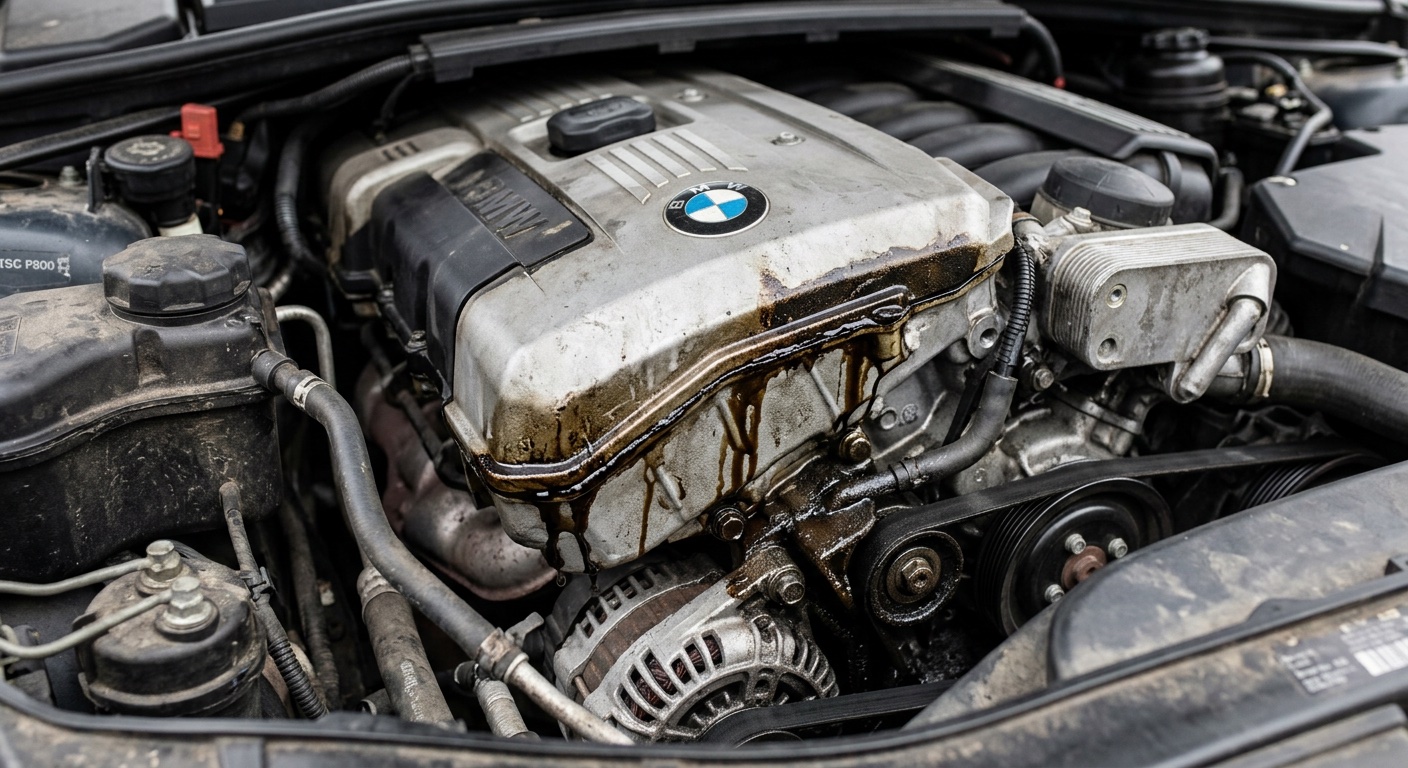
The first sign is usually a burning oil smell from the engine bay, especially after highway driving or when coming to a stop. Oil seeping from the gasket drips onto the hot exhaust manifold or turbo components, producing a distinctive acrid smell.
2. Visible Oil on the Engine
You'll see oil residue or wet spots around the perimeter of the valve cover, particularly on the exhaust side of the engine where heat accelerates gasket degradation. The oil attracts dirt and road debris, creating a grimy buildup that's clearly visible during an oil change or routine inspection.
3. Smoke from the Engine Bay
As the leak worsens, more oil contacts the exhaust manifold and turbocharger. Blue-white smoke may be visible rising from the engine bay, especially after parking (oil pools while parked, then smokes when the engine heats up on the next drive).
4. Misfires and Rough Running
This is the symptom most people don't associate with a valve cover gasket. When the spark plug well seals fail, oil leaks down into the spark plug wells, flooding the area around the ignition coils and spark plugs. Oil-soaked coils and plugs can't fire properly, causing:
- Misfires — intermittent at first, then constant
- Check engine light — with misfire codes (P0301-P0306)
- Rough idle — the engine stumbles and shakes
- Reduced power — the DME pulls timing or disables cylinders
Important: Oil in the spark plug wells can damage the ignition coils permanently. If you've had oil in the wells for an extended period, the coils may need to be replaced along with the gasket — even if they're "working" currently, they may have compromised insulation that will fail soon.
Engine-Specific Notes
N20 / N26 (4-Cylinder Turbo)
The N20 is notorious for valve cover gasket leaks, often developing them as early as 40,000-50,000 miles. The valve cover on the N20 is a plastic unit with an integrated PCV system, and BMW actually recommends replacing the entire valve cover assembly (not just the gasket) because the PCV valve and diaphragm are built in and can't be serviced separately.
N55 (6-Cylinder Turbo)
The N55 is another common offender, typically developing leaks around 60,000-80,000 miles. Like the N20, the N55 valve cover has an integrated PCV system. The valve cover itself is aluminum (not plastic), but the gasket still follows the same degradation pattern. The exhaust-side gasket seal is usually the first area to fail.
N63 / N63TU (V8 Twin Turbo)
The N63 deserves special mention because it has two valve covers (one per cylinder bank) and the turbochargers are mounted in the "hot V" between the cylinder heads. This means the valve covers are subjected to even more extreme heat than usual. N63 valve cover gasket leaks can result in oil dripping directly onto the turbochargers — a serious fire risk that should be addressed immediately.
N52 (Naturally Aspirated 6-Cylinder)
The N52 tends to develop leaks later than the turbo engines — typically around 80,000-100,000 miles. The absence of turbocharger heat means the gasket material degrades more slowly, but it still fails eventually.
Why It's More Than Just Cosmetic
Here's why you shouldn't ignore a valve cover gasket leak, even if it seems minor:
- Fire risk — oil dripping onto exhaust manifolds and turbochargers can ignite, especially the N63 with its hot-V design
- Ignition system damage — oil in spark plug wells damages coils ($50-80 each) and can foul plugs
- Catalytic converter damage — oil burning on the exhaust contaminates the cats over time
- Failed emissions inspection — visible oil leaks and elevated emissions from oil burning
- Belt contamination — oil reaching the serpentine belt causes slipping and premature failure
- Wiring harness damage — oil degrades the insulation on engine wiring, causing electrical gremlins
DIY Difficulty Level
Valve cover gasket replacement is a popular DIY job, and it's within reach for experienced home mechanics on some engines. But difficulty varies significantly:
- N52 — Moderate DIY difficulty. Accessible layout, well-documented online
- N54/N55 — Moderate to hard. Turbo plumbing and wiring in the way, proper torque sequence critical
- N20 — Moderate. Requires full valve cover replacement, timing chain tensioner proximity
- N63 — Hard. Two valve covers, turbochargers in the way, extensive disassembly required
Key point: The most critical aspect of valve cover gasket replacement is the bolt torque sequence and specification. BMW valve cover bolts are torqued to very low values (typically 7-10 Nm) in a specific pattern. Over-torquing cracks the valve cover; under-torquing means the gasket won't seal. Always use a calibrated torque wrench.
Highline's Process
When you bring your BMW to Highline for a valve cover gasket, here's what we include:
- Complete valve cover gasket replacement — including all spark plug well seals
- Valve cover inspection — checking for cracks, warping, or PCV system damage
- Full valve cover replacement when needed — N20 and other engines with integrated PCV always get a new cover
- Spark plug and coil inspection — checking for oil contamination damage
- Proper cleaning — removing all old gasket material and oil residue from sealing surfaces
- Torque-to-spec installation — following BMW's exact torque sequence with a calibrated wrench
- Post-repair verification — running the engine to operating temperature and checking for any seepage
Leaking Valve Cover Gasket?
Don't let a simple gasket leak turn into misfire damage or worse. Highline provides complete valve cover gasket service with proper BMW specs and procedures.